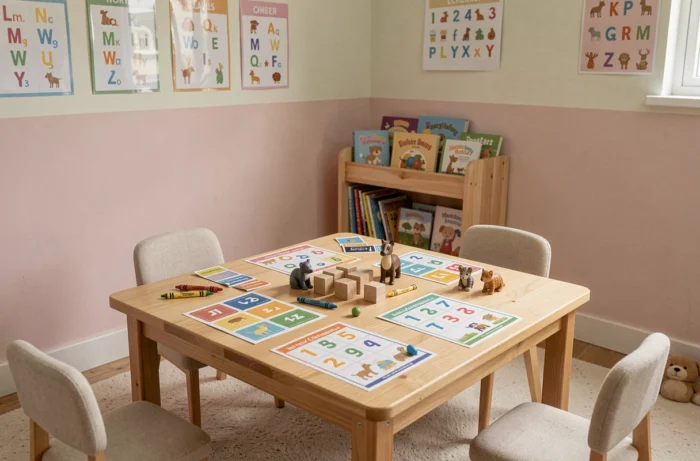
A child aged 2-3 years who refuses to sit in front of a worksheet, we all know the situation. The problem rarely comes from the material: it’s the format that doesn’t match their attention span. To learn to count in preschool, printable activities work as long as the approaches are varied (cutting, gluing, manipulating stickers) and the quantities remain very short, from 1 to 3 to start.
Here are ten types of concrete exercises, tested in class or at home, each covering a different aspect of counting.
1. Counting strips with multiple representations
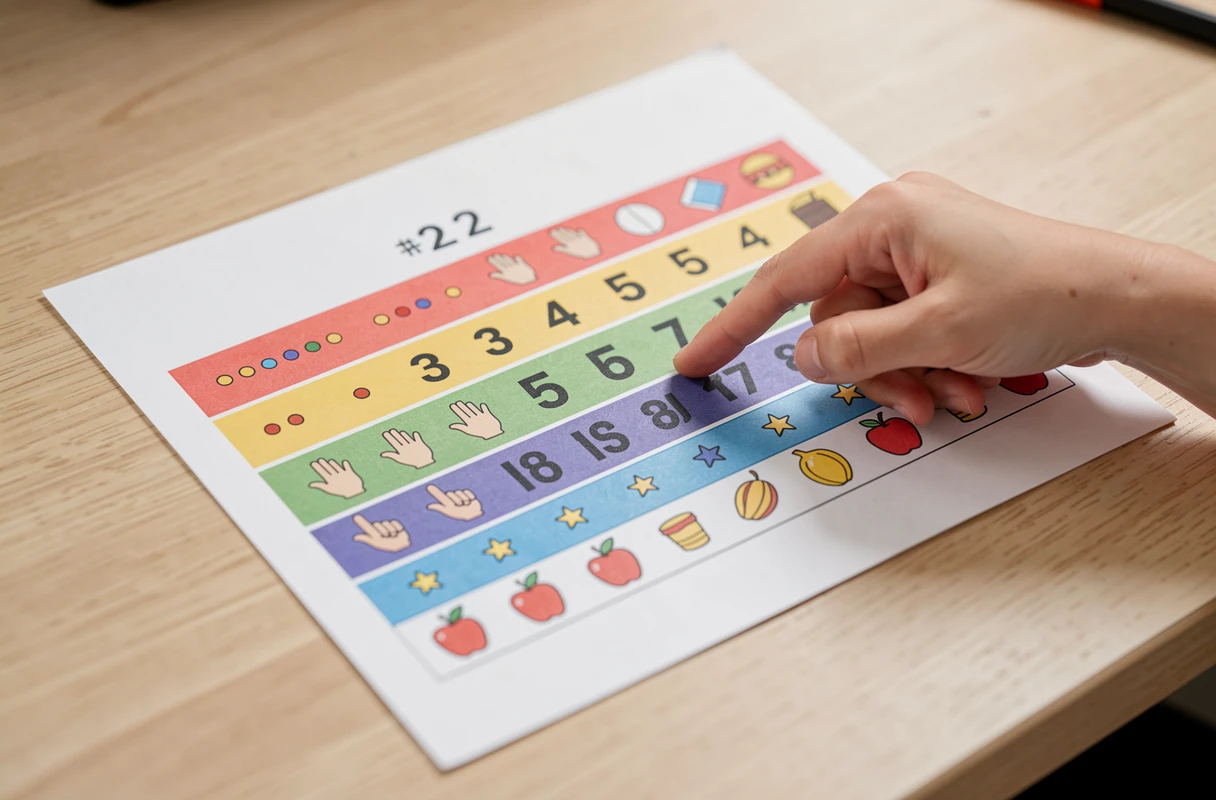
We print a horizontal strip where each number (from 1 to 5) appears in several forms: the written digit, fingers, the constellation of the die, and a group of illustrated objects. The child points to each column and visually associates the representations with each other.
This format forces the connection between real quantity and abstract symbol. The resources available in preschool printable activities offer this type of support with visuals suitable for 2-3 year olds. We laminate the strip so it can serve as a reference throughout the year.
2. “Count and Glue” worksheets with cutting
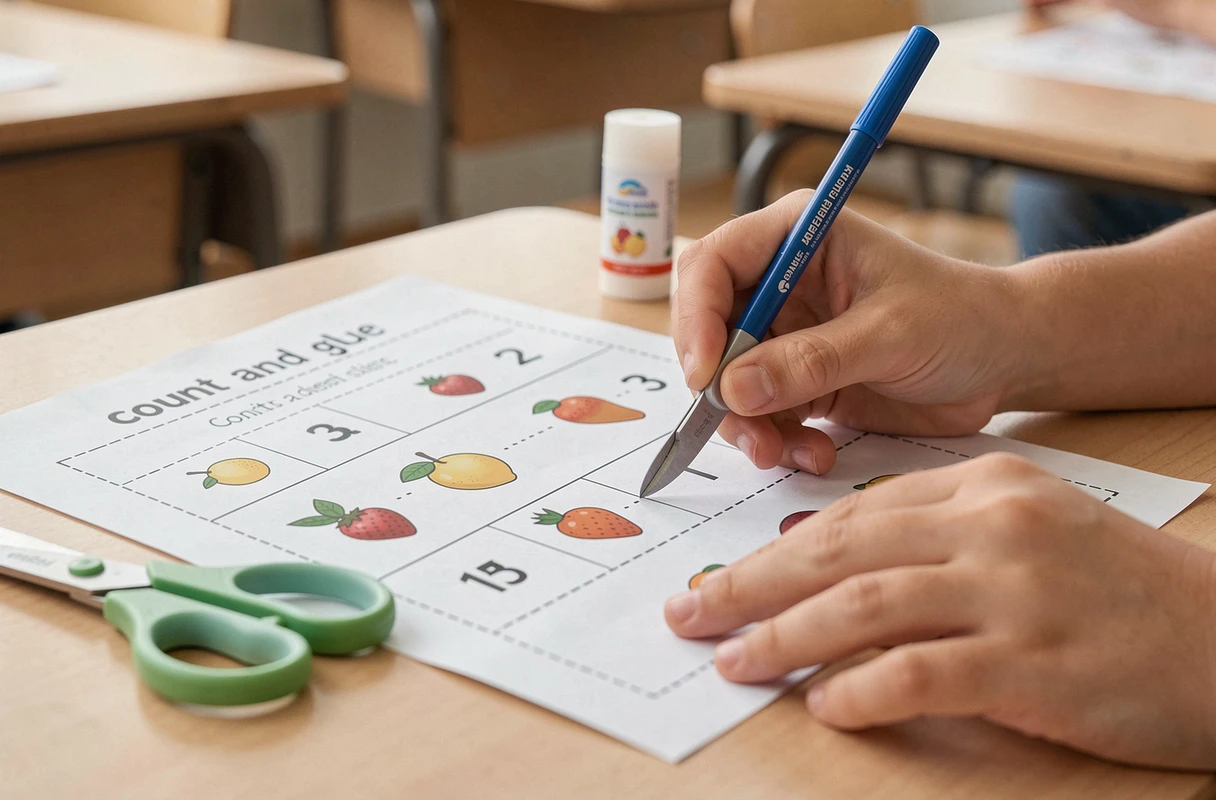
The child cuts out images at the bottom of the page, counts the required elements on each line, and then glues the correct number of images into the corresponding box. Cutting, counting, and then gluing engages fine motor skills as much as counting.
This format works well because it breaks the monotony of using a pencil. We start with quantities of 1 to 3, no more. The cutting gesture remains approximate at this age, but that’s precisely the point: the activity becomes a true autonomous workshop rather than just a simple pointing exercise.
3. Number clip cards
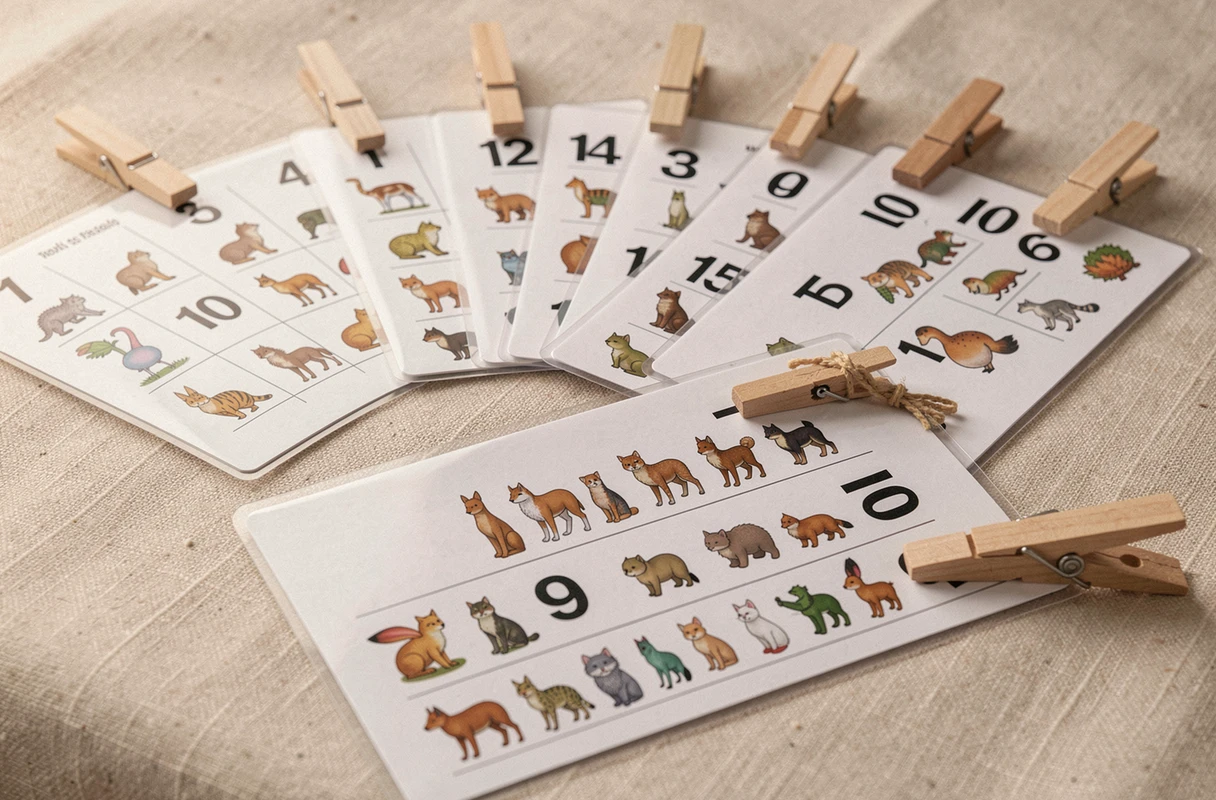
We print cards with a number in the center and several quantity options on the edges. The child attaches a clothespin to the correct answer. The pinching action reinforces grasping, and self-correction happens by flipping the card (a dot on the back indicates the correct answer).
This support is stored in an autonomy box. It requires neither glue nor scissors, making it practical at the end of the day when the child needs a calm activity.
4. Counting box boards
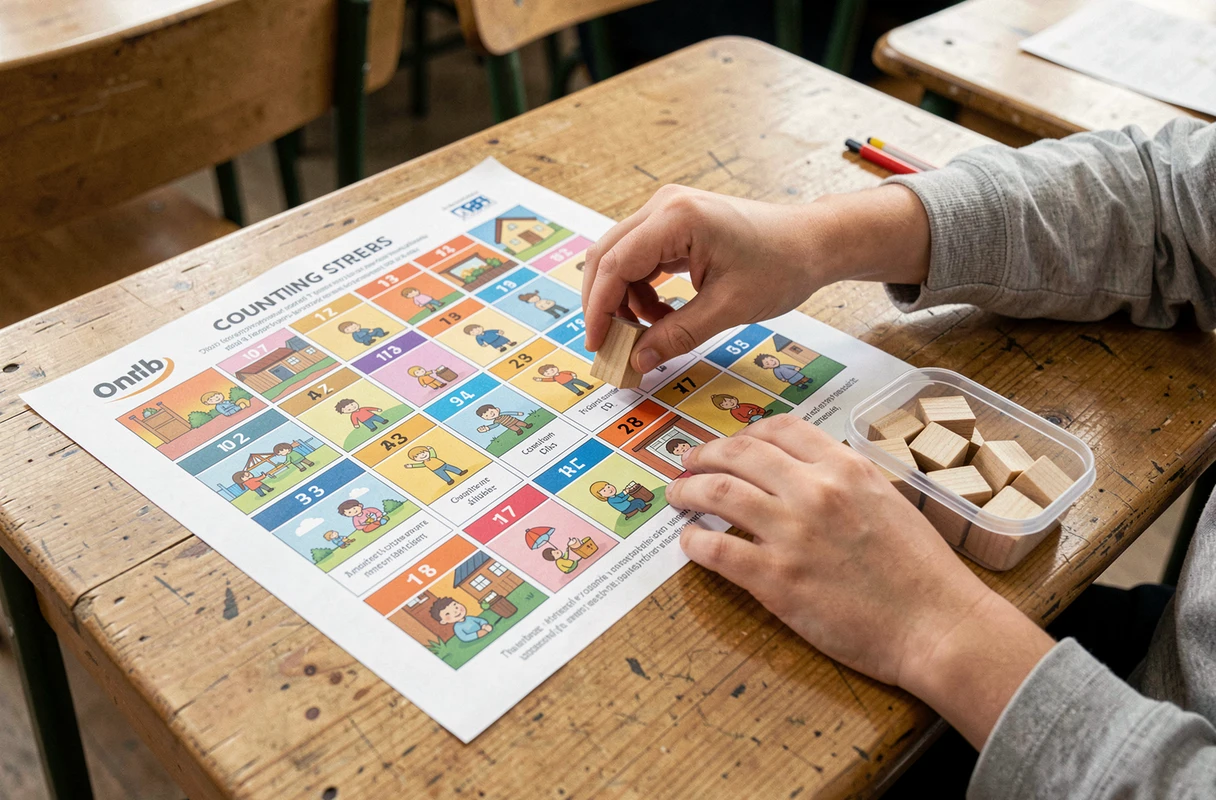
We print thematic boards (animals, fruits, vehicles) that are slid into the counting box. The child places the correct number of tokens or images in each box.
The advantage: we can renew the boards without buying new materials. Feedback varies on this point, but seasonal themed boards (autumn, Christmas) maintain interest longer than generic boards.
5. Coded coloring by quantity
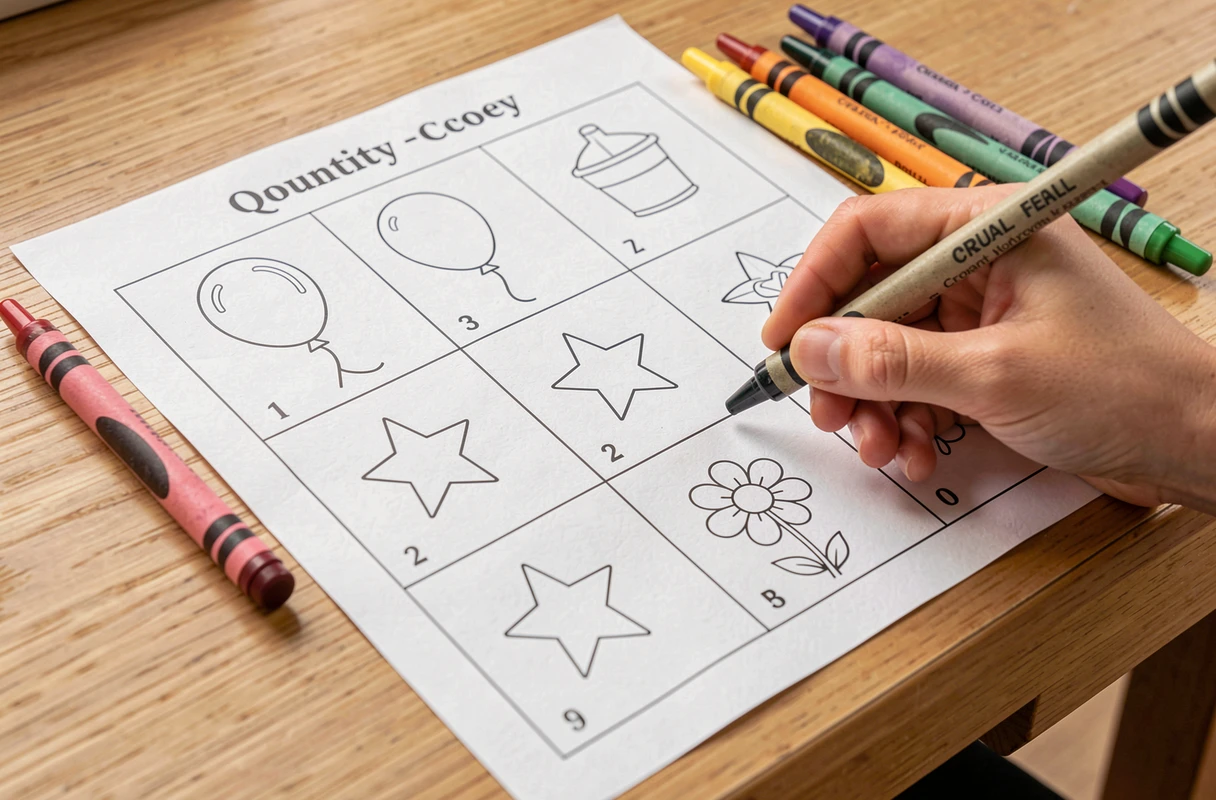
Each area of the drawing has a number. The child must first read the number, then match it with the corresponding color indicated in the legend. Coded coloring links number recognition and visual instructions.
For preschool, we stick to two or three colors maximum. A simple drawing (fish, house) with large areas works better than a detailed illustration. The goal is not the precision of coloring but the reading of the number.
6. Counting worksheets with stickers
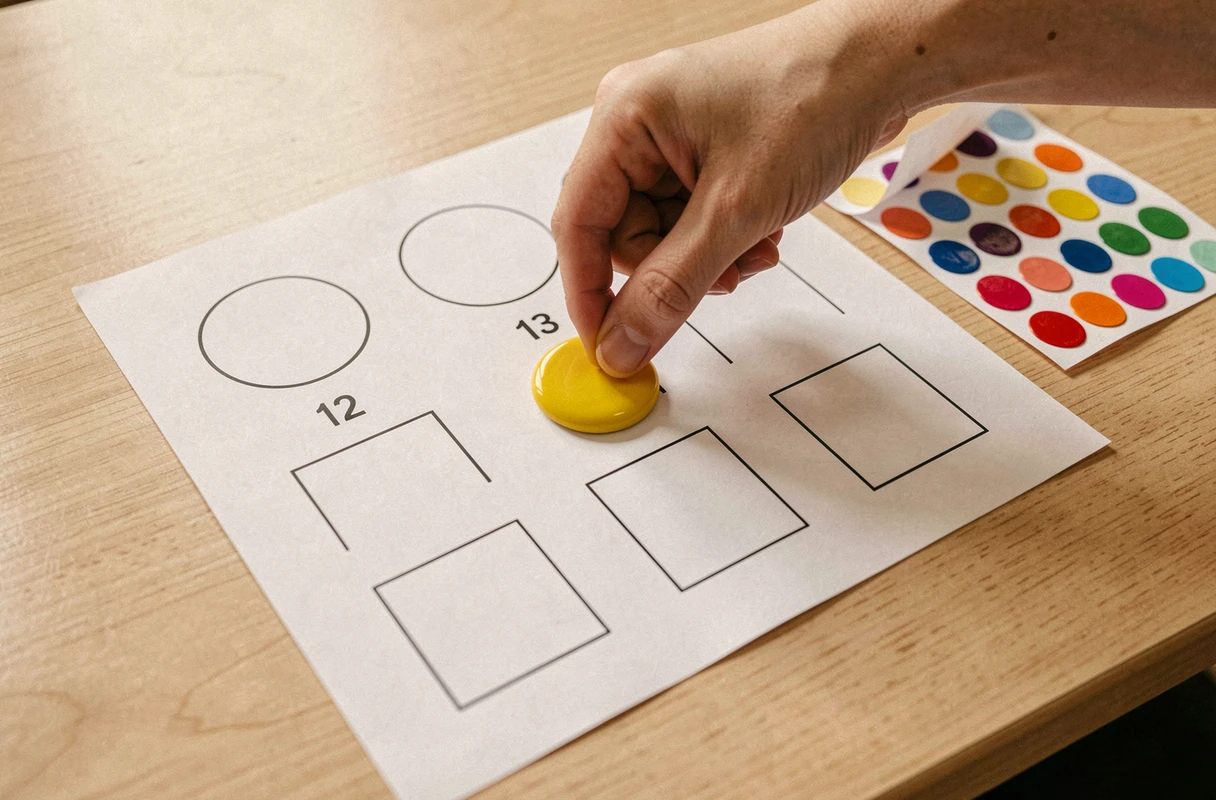
The worksheet presents a number and empty circles to fill with stickers. The child glues the correct number of stickers for each line. This format is very accessible from age 2 because the action of gluing a sticker is simpler than drawing or cutting.
This activity can be combined with a color sorting to add a layer of progressive difficulty:
- Line 1: glue 1 red sticker
- Line 2: glue 2 blue stickers
- Line 3: glue 3 yellow stickers
7. Illustrated dominos to print and cut
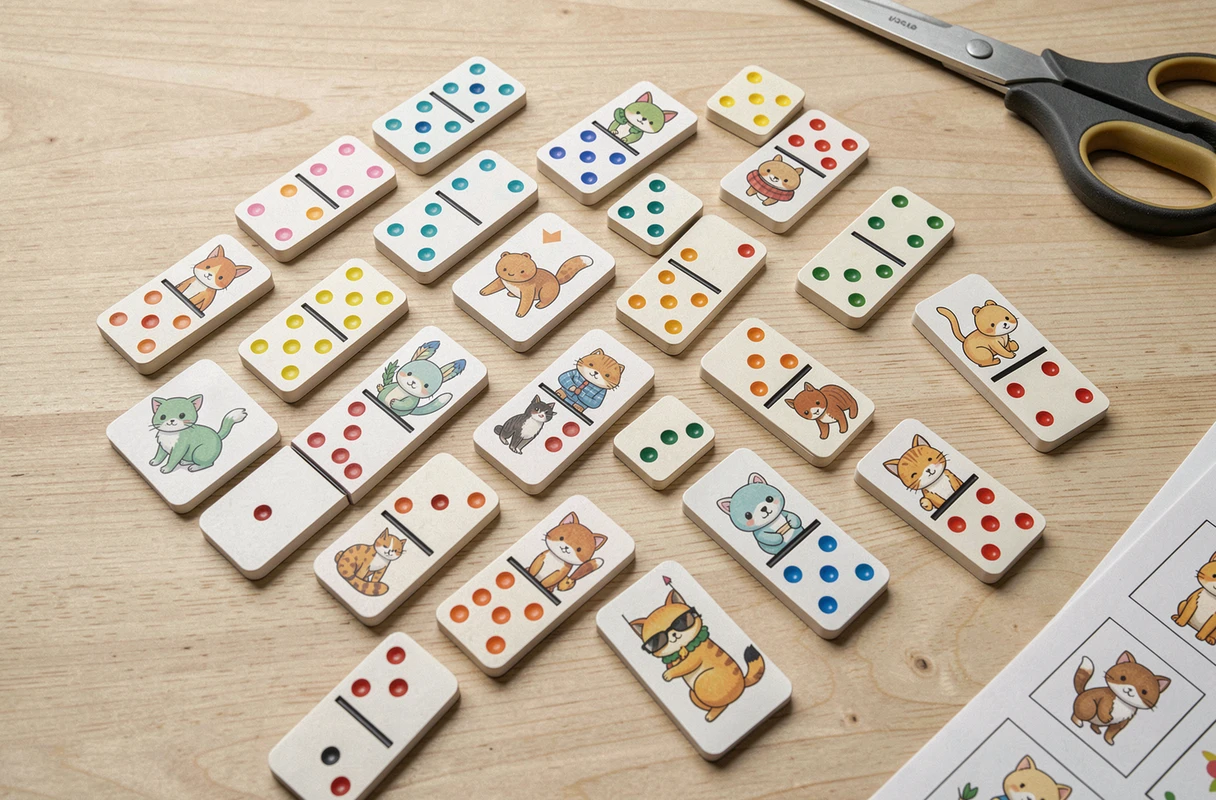
We print a sheet of dominos where one side shows a constellation (dots from the die) and the other a group of objects. The child matches the sides that represent the same quantity. The domino format turns counting into a matching game.
Plan to use slightly thick or laminated paper for the dominos. In class, this game works well in pairs, adding a social dimension to the mathematical exercise.
8. Number mazes from 1 to 5
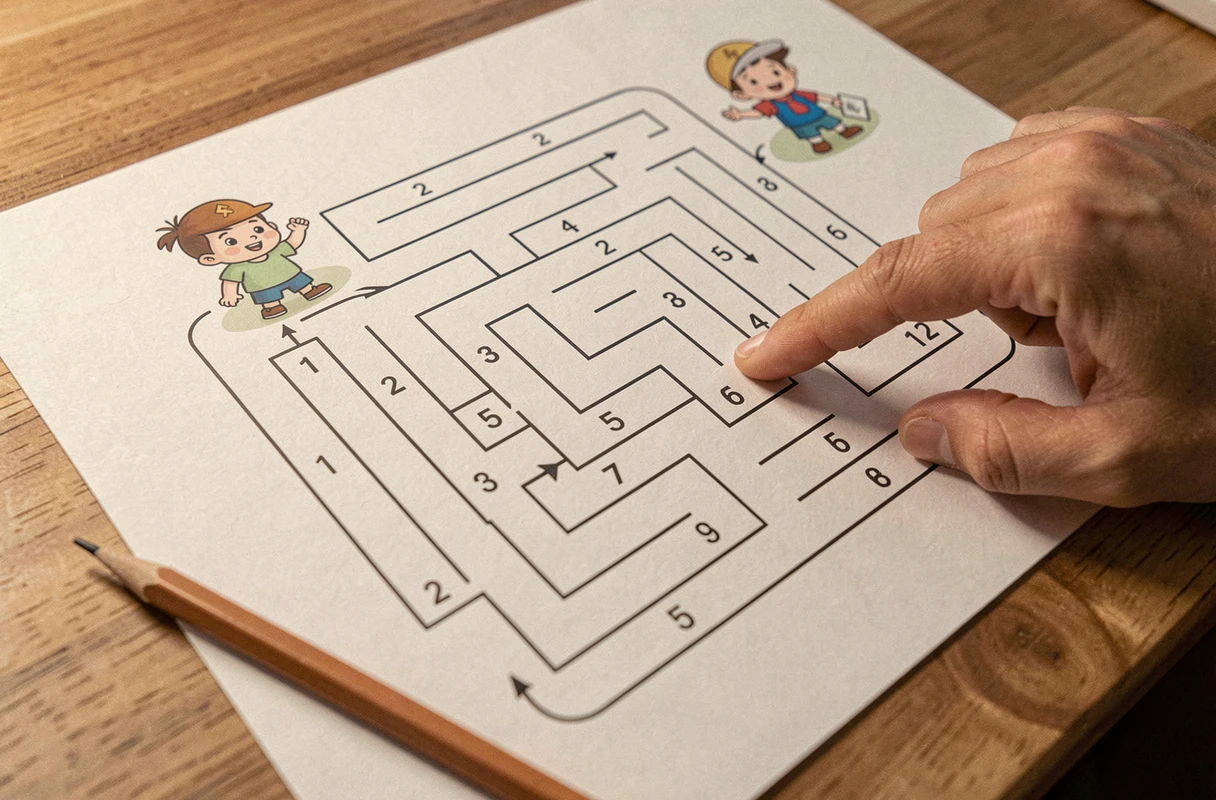
The child traces a path in the maze by following the numbers in ascending order. Instead of simply reciting the number rhyme, they put it into practice with a motor trace. The difficulty remains low: the maze has few branches and the numbers go from 1 to 5.
This type of worksheet appeals to children who quickly tire of static exercises. The act of finding a path adds a playful element absent from traditional counting worksheets.
9. Two-way tables quantity-object
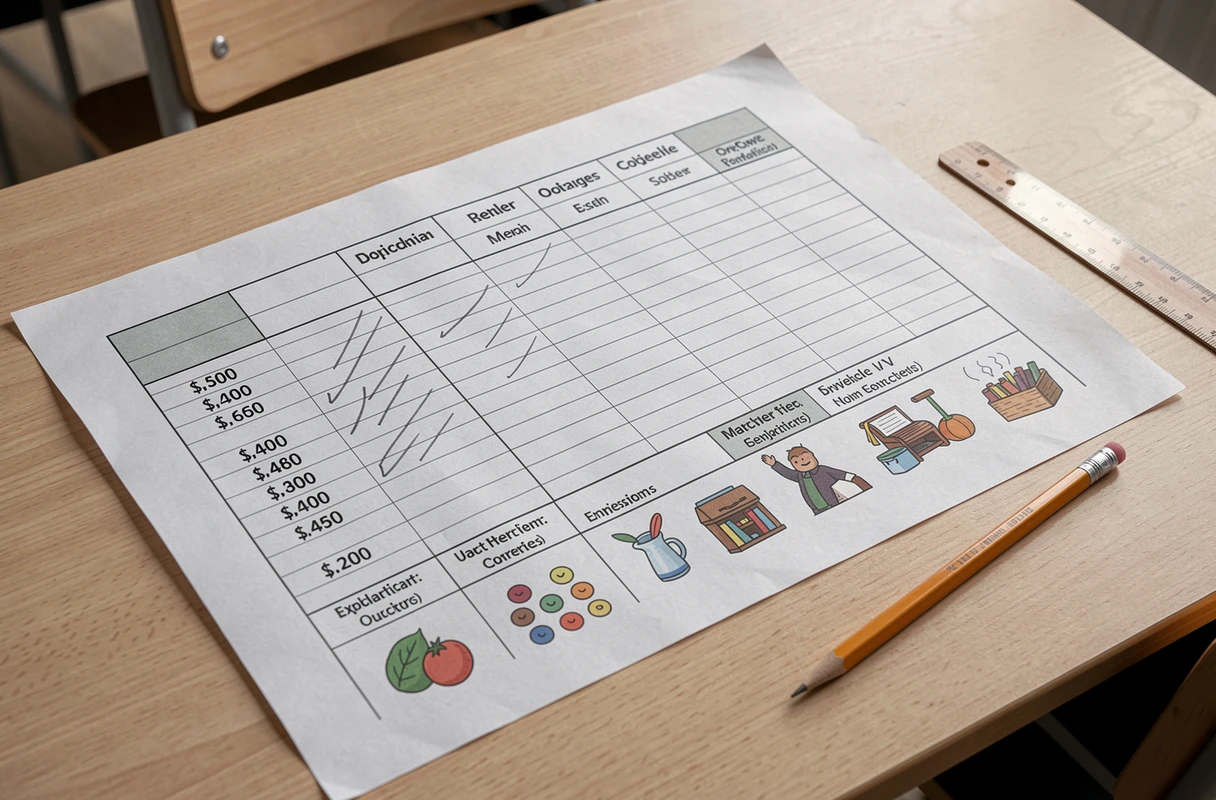
A simple table: in columns, numbers from 1 to 3; in rows, categories of objects (stars, hearts, circles). The child draws or glues the correct number of objects in each box.
This format introduces table reading as early as preschool. We stick to a maximum 3×3 grid. The skills worked on go beyond simple counting:
- Locating within a grid
- Cross-referencing two pieces of information (which object, how many)
- Reproducing a precise quantity in a defined space
10. Number houses to complete
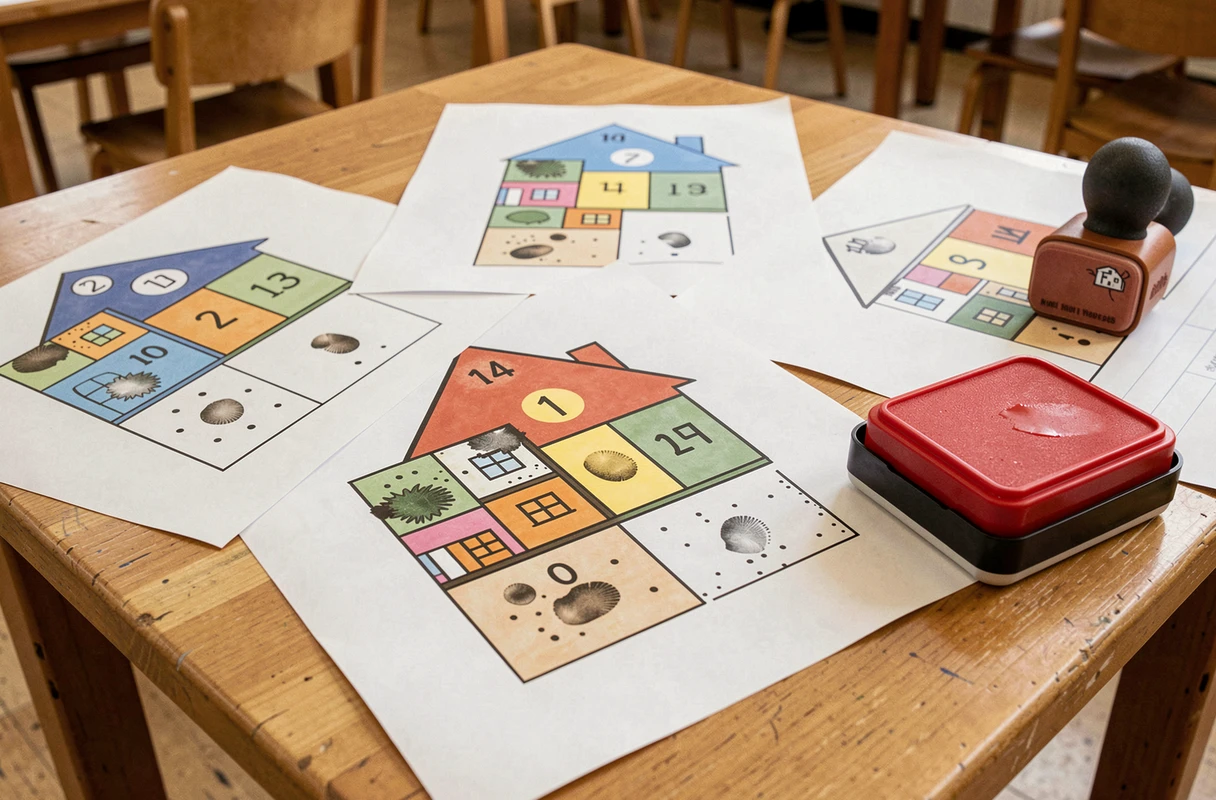
Each worksheet represents a “house” dedicated to a number. The child completes the floors with different representations: drawing the correct number of dots, gluing images, tracing the number. The number house synthesizes all the counting work on a single support.
We start with the house of 1, then 2, then 3. Each house can be displayed on the classroom wall or in a success notebook at home. This support also serves as an end-of-term assessment to check what the child has mastered.
The common point of these ten formats: they avoid the repetitive worksheet where the child circles the correct number without thinking. Each activity engages a different gesture (pinching, gluing, tracing, cutting) and a different reading of the number. Alternating these supports throughout the week is enough to cover the counting expectations in preschool without boring the child.