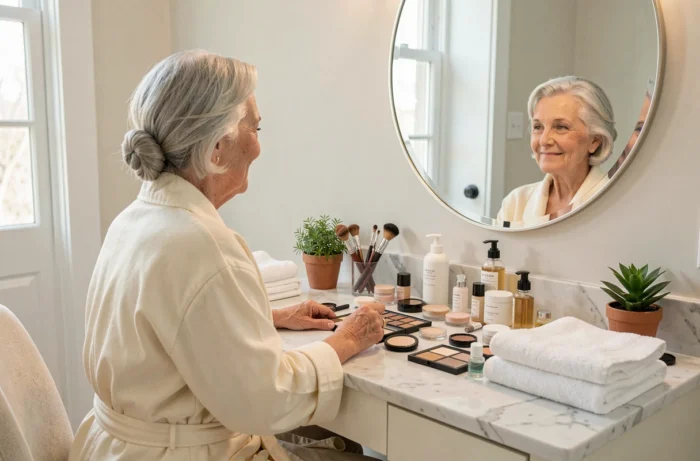
Makeup after 70 is not about erasing the years. It’s about working with the texture and luminosity of the skin as it is today. Wrinkles, spots, thinner eyelids: each characteristic guides the choice of a product or technique. Here are ten practical makeup tips focused on the textures, tools, and areas of the face that change the most with age.
1. Apply SPF 30 sunscreen before any makeup
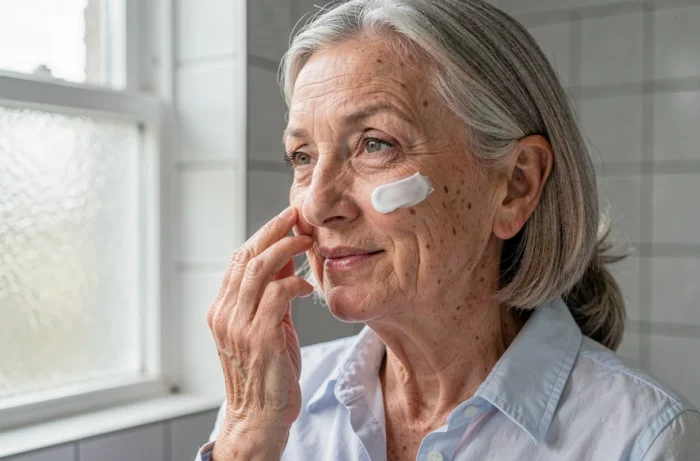
Have you noticed that some brown spots darken over the summer? Even after 70, UV rays remain the main accelerator of skin aging. The recommended sequence by dermatologists is simple: gentle cleansing, moisturizing cream, then broad-spectrum sunscreen with at least SPF 30.
This protective film also acts as a smoothing base. Let it absorb for two to three minutes before applying any foundation. Without this step, the pigments of the makeup do not adhere evenly.
2. Choose a serum foundation rather than a heavy formula
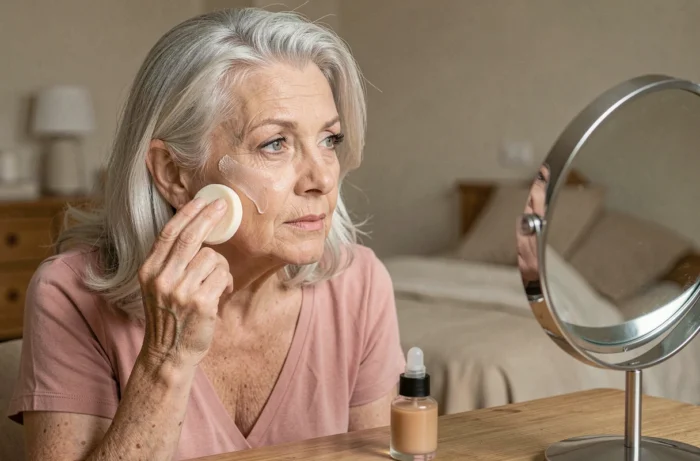
Heavy foundations freeze the features and accumulate in fine lines. Recent serum foundation or hydrating tinted cream formulas even out the complexion without a plaster effect. Their satin finish brings light where a matte texture visually dries out the skin.
If you’re looking for more detailed makeup tips for women over 70 regarding texture choices, serum foundation remains the category to prioritize for mature skin. Apply it from the center of the face outward, in small dabs, with your fingers or a damp sponge.
3. Use a hydrating concealer only where necessary
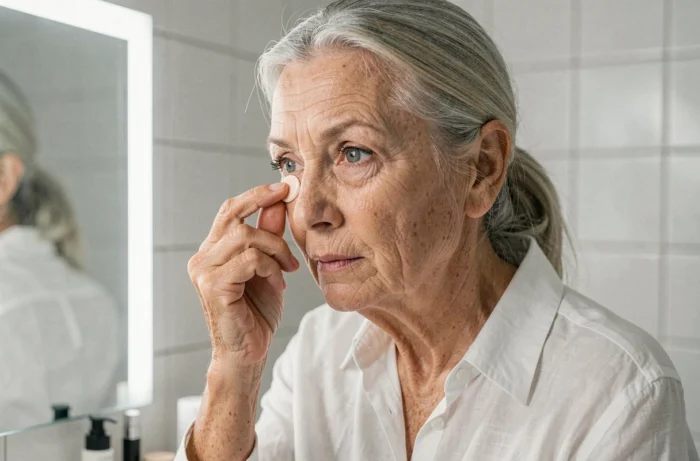
Covering the entire under-eye area can weigh down the eyes. Apply the concealer in small dots on the inner hollow of the eye and on the darkest areas, then gently tap without stretching the skin. Choose a creamy, hydrating formula, one shade lighter than your skin tone.
A concealer that is too dry accentuates fine lines instead of diminishing them. If the product cracks after an hour, it lacks moisturizing agents. Versions enriched with hyaluronic acid offer a longer-lasting smoothing effect.
4. Redefine eyebrows with a fine pencil to structure the face
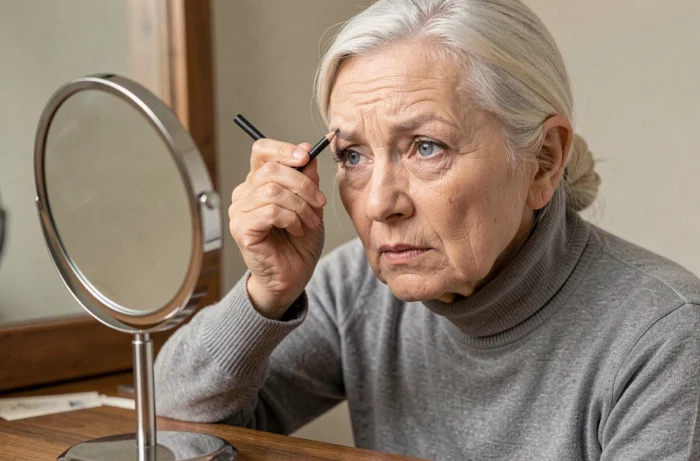
With age, eyebrows thin and lose density. A fine-tipped eyebrow pencil allows for small strokes in the direction of hair growth, resulting in a natural look. The shade should remain close to the natural color: a shade that is too dark hardens the face.
First, brush the hairs upward with an eyebrow brush. Then fill in sparse areas without drawing a continuous line. Well-defined eyebrows frame the eyes and immediately give the impression of a structured face.
5. Opt for matte and satin eyeshadows, never shimmery
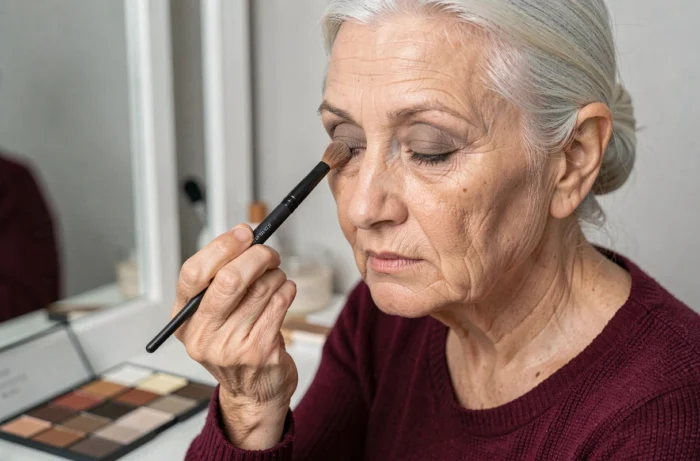
Shimmery or glittery eyeshadows attract light to drooping eyelids and highlight every crease. Matte or slightly satin textures dress the eyes without emphasizing sagging.
Why this choice? The mobile eyelid loses visible surface area after 70. A matte eyeshadow in a neutral tone (rosy beige, taupe, soft brown) applied to the mobile eyelid and blended into the crease is enough to open the eyes. A fine line of brown pencil along the upper lashes enhances the effect without overwhelming.
6. Apply mascara only to the upper lashes
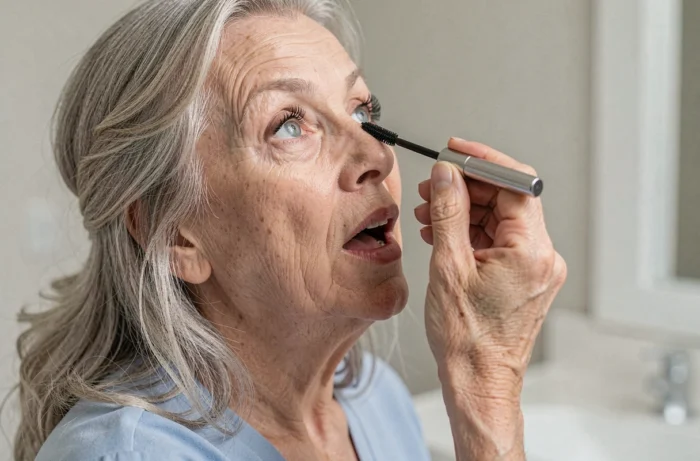
Applying mascara to the lower lashes tends to pull the gaze downward and can smudge under the eye during the day. Focus the mascara on the upper lashes, emphasizing the center lashes for an opening effect.
Prefer a waterproof formula if your eyes tend to water, or a lengthening mascara rather than a volumizing one. Two thin layers are better than one thick layer that clumps.
7. Choose a cream blush rather than a compact powder
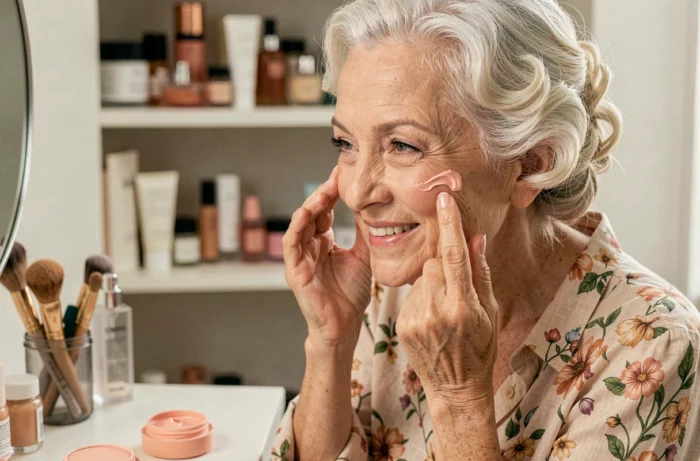
Compact powder settles into enlarged pores and dries out the skin. A cream blush blends into the complexion and gives a more natural healthy glow. Smile, then apply it to the tops of your cheeks, slightly lifting towards the temples.
- Pale to medium skin tones suit peach and soft pink shades.
- Apricot and coral tones warm up darker skin.
- Raspberry or dark plum shades age the complexion and should be avoided.
8. Define lips with a lip pencil before lipstick
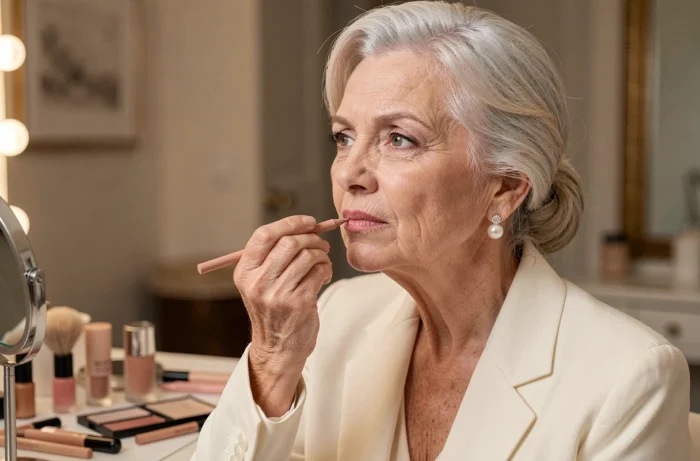
The lip contour becomes less defined with age, and lipstick tends to feather into fine lines. A lip pencil in the same shade as the lipstick (or slightly lighter) redefines the outline and prevents the color from migrating.
Trace the pencil just on the natural lip edge, without going over. Then fill in the entire surface with the same pencil: this base makes the lipstick last two to three times longer.
9. Prefer a creamy lipstick to long-lasting matte formulas
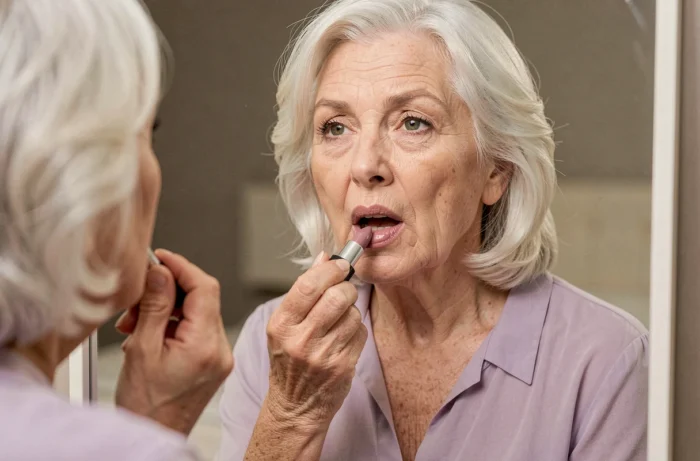
Liquid matte lipsticks dry out the lips and accentuate vertical lines. Creamy or satin formulas hydrate while providing color. A natural rosy tone or a nude slightly more pronounced than your lip color gives a flattering result without being too bold.
Avoid very dark shades that visually shrink the mouth. A creamy lipstick in a shade close to your natural color enlarges the lips and brightens the lower face.
10. Set makeup with a misting spray, not a loose powder
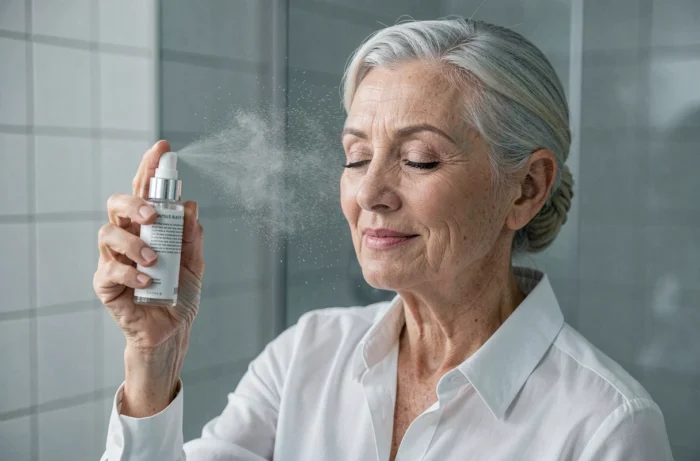
Loose powder, even translucent, can give a cardboard appearance on mature skin. A setting spray keeps makeup in place while maintaining the satin look of the complexion. Spray from a distance (about 20 centimeters) and let dry without touching.
If certain areas shine in the middle of the day, blot them with a tissue rather than re-powdering. This technique removes excess sebum without adding product to the skin.
Each of these steps stands on its own: adopting even just two or three of these adjustments already changes the wear and appearance of makeup. The texture of the product matters more than its brand, and moderation remains the best ally for a luminous result on skin over 70.