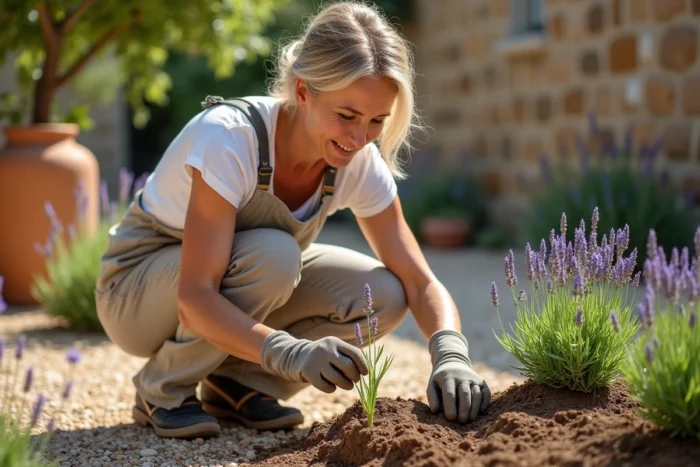
Lavender is a Mediterranean sub-shrub whose survival in open ground depends less on the climate than on the nature of the soil and drainage at its base. A plant placed in compact clay soil will die within a few months, even under generous sunlight. Understanding this root requirement before digging any holes radically changes the success rate.
Soil Drainage: The Factor That Determines Lavender’s Survival
Most planting failures are explained by excess stagnant moisture at the root level. Lavender tolerates drought, heat, and wind, but it cannot withstand waterlogged soil in winter. A substrate that retains moisture causes collar rot within a few weeks.
Before planting, test your soil. Dig a hole, fill it with water, and observe. If the water takes more than an hour to disappear, the drainage is insufficient for lavender. In this case, you have two concrete options.
- Raise the planting area by creating a mound of soil mixed with gravel or coarse sand, about twenty centimeters high
- Plant lavender at the edge of a slope or on naturally sloped land, where water drains by gravity
- Mix a layer of pebbles or pumice at the bottom of the planting hole to avoid any retention in direct contact with the roots
A calcareous, stony, or even poor soil is perfectly suitable. Lavender does not need fertile soil. Providing compost or rich potting soil is counterproductive: it produces more foliage at the expense of flowering, and its wood becomes fragile against frost.
To learn how to plant lavender in the ground according to your soil type, you must first accept that this plant prefers scarcity to abundance.
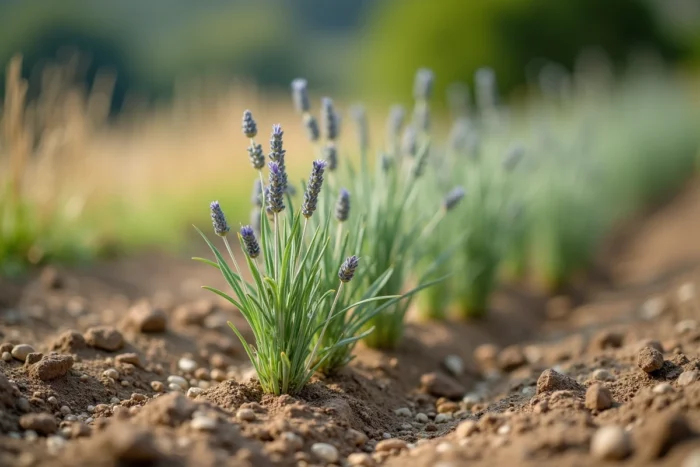
Planting Period by Region: North or South of the Loire
The planting calendar varies significantly depending on your geographical location, a point that classic guides often treat too vaguely.
North of the Loire or at altitude, planting takes place between March and April. The soil must be warm enough for the roots to settle before summer. Planting in autumn in these areas exposes the young plant to prolonged frosts that it is not mature enough to withstand.
In contrast, in a Mediterranean or mild oceanic climate, autumn planting (September-October) yields better results. The plant benefits from autumn moisture and still mild temperatures to develop its root system. The following spring, it starts off with several months’ advantage.
This regional distinction is not a detail. A lavender planted at the wrong time spends its first summer surviving instead of rooting, making it vulnerable during the first harsh winter.
Watering Lavender After Planting: Common Mistakes
The repeated discourse about lavender “that needs nothing” applies to plants established for two or three years. A newly planted specimen needs regular watering until autumn, especially after a spring planting.
The most common mistake is to water little but often, on the surface. This action encourages the roots to stay near the surface instead of going deep. The result: a plant that becomes dependent on watering and struggles during heatwaves.
The correct method is to water generously but infrequently. Pour a generous amount of water at the base, then wait for the soil to dry deeply before the next watering. Two deep waterings per week during hot periods are sufficient in the first year. From the second season onward, gradually reduce until you no longer water at all, except in cases of prolonged exceptional drought.
Never use organic mulch (bark, straw) at the base of lavender. This type of cover retains moisture at the collar and promotes fungal diseases. If you want to mulch, opt for light gravel or pumice, which limits weeds without retaining water.
Pruning Lavender: The Action That Extends the Plant’s Lifespan
An unpruned lavender will become bare at the base in three to four years. Old wood no longer produces new shoots, and the shrub takes on an irreversible scraggly appearance. Pruning each year prevents excessive lignification and maintains a compact shape.
Pruning is done just after flowering, cutting the flower stems and the upper third of the year’s growth. The cut point should remain above the old wood: if you cut into the dry brown wood, no regrowth will occur in that spot.
- First year: remove faded flowers without shortening the foliage, to allow the plant to strengthen
- Second year: shape into a ball after flowering by removing about one-third of the green mass
- Subsequent years: maintain the same annual pruning, ensuring never to cut into bare wood
This annual discipline may seem trivial, but it is what distinguishes a productive lavender for a decade from a scraggly clump that needs to be pulled out after four years.
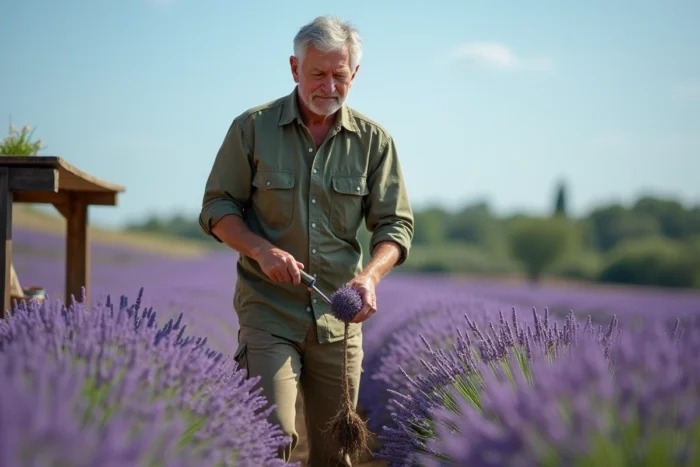
Exposure and Location in the Garden: Full Sun Without Compromise
Lavender requires a minimum of six hours of direct sunlight per day. In partial shade, it survives but flowers little, stretches toward the light, and loses its characteristic compact shape.
Plant it along a path, against a south-facing wall, or in the foreground of a flowerbed. Avoid locations at the foot of hedges or trees with dense foliage: root competition combined with shade creates unfavorable conditions on both fronts.
One last often-overlooked point: air circulation. A lavender plant trapped between two dense flowerbeds dries poorly after rain, which encourages fungi. Leave enough space between each plant to allow air to circulate freely around the foliage.
The success of a lavender planting depends on a few decisions made even before picking up the shovel: testing drainage, choosing the right time according to your region, resisting the urge to overwater and overfeed. The rest, the plant will take care of itself.