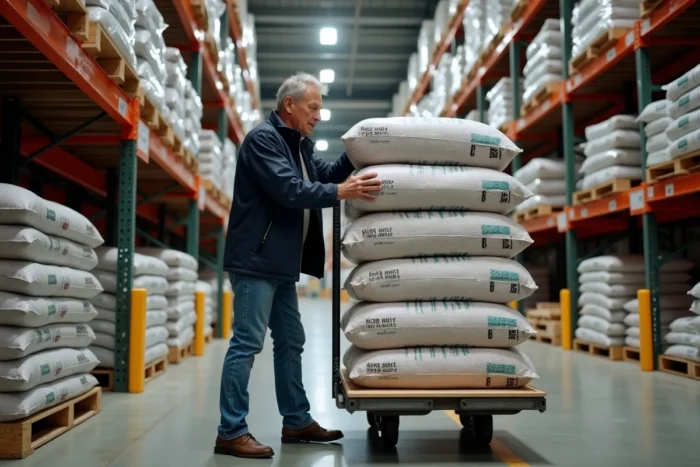
The bag of pellets for less than 4 euros at Brico Dépôt may have crossed your path in-store or in a flyer. This price grabs attention, but it doesn’t tell the whole story. Behind the displayed price are quality discrepancies, seasonal variations, and a national trend that impacts your wood heating bill. Understanding these mechanisms allows you to buy at the right time, at the right price, without sacrificing the performance of your stove.
DINplus Certification of Wood Pellets: What the Price Doesn’t Show
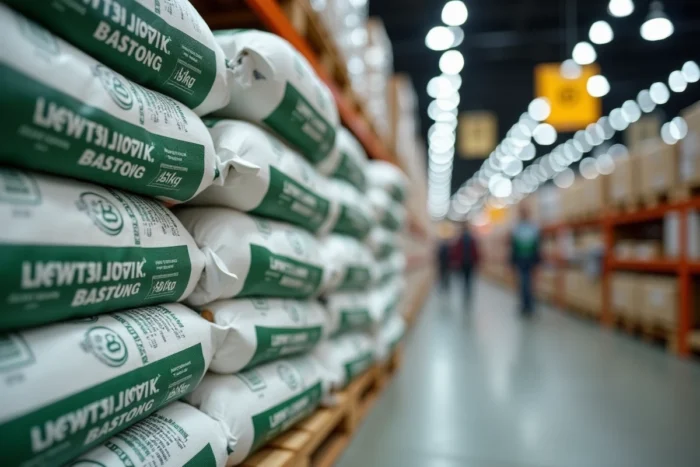
At Brico Dépôt, the 15 kg bags generally display the DINplus certification. This label guarantees a low moisture content and high energy density. In practice, this means that the pellet burns longer and clogs your stove less.
Have you noticed black residues in the ashtray after just a few hours of heating? This is often a sign of pellets that are too moist or poorly compressed. A DINplus certified pellet reduces stove clogging and limits the need for cleaning during the season.
The brand “Les Granulés Français,” regularly offered in-store, meets this standard. When you compare the price of Brico Dépôt pellets with other retailers, always check that the certification is the same. A cheaper bag without DINplus certification may cost more in maintenance and overconsumption.
Price Evolution of Pellets in France: Confirmed Decrease in 2024
The prices practiced in-store do not only reflect the retailer’s commercial policy. They follow a national trend. The Propellet France index placed bagged pellets at 8.47 c€/kWh including tax in the first quarter of 2024, a significant decrease compared to the third quarter of 2023.
This trend is explained by a market rebalancing after the surge in 2022. European production has caught up with demand, and stocks at French manufacturers have been replenished. The average price of a pallet of 15 kg bags was around 418 euros per ton in the fourth quarter of 2024 according to Maguy Énergies.
Why does this data matter to you? Because a bag sold between 3.79 and 4.29 euros at Brico Dépôt is significantly below the average market price in France. As a reference, Bois Énergie Nord indicated an average price for the 15 kg bag between 8 and 10 euros for January 2024. The difference is significant.
Buy in Summer or Wait for Autumn
The classic reflex is to buy pellets in spring or summer when demand weakens. DIY stores then clear out at lower prices to free up warehouse space.
However, waiting until October or November exposes you to two risks: stock shortages on the cheapest references and prices rising by a few tens of cents per bag. On an order of one ton (about 66 bags), a few cents difference per bag represents several tens of euros in total.
Concrete Criteria for Choosing Pellets at Brico Dépôt
The price per bag remains the first reflex for comparison. But other parameters directly influence the actual cost of your heating over a full season.
- The moisture content displayed on the packaging: below 10%, the pellet offers optimal efficiency. Above that, combustion loses effectiveness and generates more ash.
- The length and diameter of the pellets: a pellet that is too long or irregular can block the auger of some pellet stoves. Standardized formats (6 mm in diameter, 10 to 30 mm long) suit the vast majority of devices.
- The origin of the wood: pellets made in France from local softwoods generally have a more favorable carbon footprint than pellets imported from Eastern Europe. The mention “fabrication française” on the bag is not just a marketing argument; it also reduces transportation.
- The storage conditions in-store: a bag stored outside, even under a tarp, may have absorbed moisture. Check that the packaging plastic is intact and not perforated before purchasing.
Compare the Price of Brico Dépôt Pellets with Other Retailers
Large DIY stores are not the only ones selling wood pellets. Supermarkets (Leclerc, Auchan), specialized dealers, and online platforms also offer 15 kg bags. The comparison requires some precautions.
At Leclerc, prices vary significantly from one region to another. The regional difference can exceed one euro per bag for comparable quality. This disparity is explained by logistical costs and the proximity of production sites.
The Trap of Unit Price Without Considering Delivery
A bag priced at 3.99 euros for in-store pickup can cost more than 5 euros if you opt for home delivery. A pallet of 65 bags weighs nearly a ton. Transport is never free at this weight, even when the retailer advertises it as “free” (it is then included in the product price).
Brico Dépôt offers in-store pickup without additional fees, which is a concrete advantage if you have a suitable vehicle. For those who do not have this option, always compare the total cost delivered to your home, not just the price per bag.
Perceived Quality and User Feedback
On forums and specialized groups (notably pellet stove communities), feedback on pellets sold at Brico Dépôt is generally positive for regular use. Complaints sometimes concern the consistency from one batch to another, which is common for private label brands in any DIY store.
The price of pellets at Brico Dépôt remains among the most competitive in the French market for the 2024 season. The real savings do not only occur at the time of purchase but by combining off-season sourcing, reliable certification, and dry storage. A well-chosen and well-stored bag heats better, lasts longer, and costs less per kilowatt-hour than a discounted bag that has been degraded by moisture.