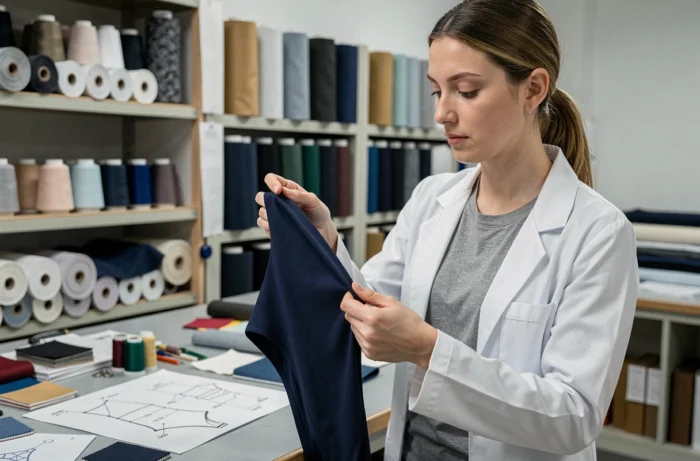
What technical criteria separate a reliable menstrual swimsuit from a model that leaks after the third swim? The answer lies in the choice of membranes, resistance to chlorine and UV, and the absorption capacity after several dozen washes. This article details the manufacturing parameters that make the difference between a durable product and a simple lined swimsuit.
Waterproof membrane and chlorine resistance: the tests that matter
The starting point of a reliable menstrual swimsuit is its waterproof barrier. Manufacturers who document their technical choices now use films made of TPU (thermoplastic polyurethane), explicitly free of PFAS. This material replaces traditional PUL membranes, whose performance in aquatic environments was poorly documented.
The difference is measured in the laboratory. A serious protocol includes a hydrostatic pressure test, which simulates the stress exerted by moving water on the membrane. This test verifies that the film does not allow anything to pass through, even under pressure while swimming.
The second aspect is durability. The most demanding specifications require a validated resistance over 50 washing cycles in chlorinated water, seawater, and UV exposure. These tests are conducted by independent laboratories (Eurofins, for example) that provide numbered reports. When you explore the creation of a menstrual swimsuit on Mode Sign, this level of technical documentation distinguishes an industrial approach from a simple artisanal assembly.
A swimsuit whose technical sheet does not mention any testing protocol or PFAS-free certification should raise caution. Test reports (PFAS screening, hydrostatic pressure, wash stability) form the foundation of the technical file, far from mere marketing promises.
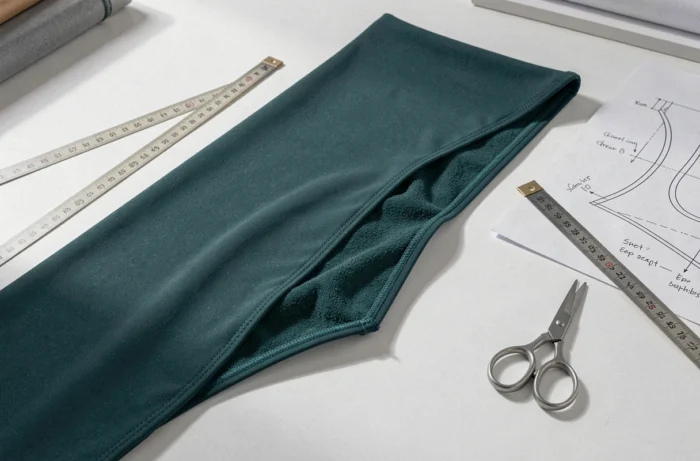
Comparison table: membranes and technical layers of menstrual swimsuits
| Component | TPU Membrane (PFAS-free) | Classic PUL Membrane |
|---|---|---|
| Waterproofness under pressure | Validated by hydrostatic test | Rarely documented in aquatic conditions |
| Chlorine/UV resistance | Tested for a minimum of 50 cycles | Possible degradation from the first chlorinated washes |
| PFAS Certification | Screening report required | Frequent absence of data |
| Perceived thickness | Thin, no “layer” effect | Variable depending on the supplier |
| Drying | Quick due to the microporous structure | Slower if the film is thick |
This table summarizes the gap between two manufacturing approaches. The certified PFAS-free TPU membrane represents an additional cost for raw materials, but it guarantees durability that generic films cannot prove.
Absorbent layer for menstrual swimsuit: actual capacity and behavior in water
The absorbent layer is the most delicate component to calibrate. It must quickly capture the flow, retain it without swelling, and not become saturated with pool or seawater. The fibers used are hydrophilic (they attract menstrual blood) but must remain stable in contact with chlorinated water.
The most efficient models claim a capacity equivalent to one to four tampons depending on the chosen thickness. However, this capacity drops if the absorbent fibers do not withstand chlorine over time. That’s why validation after repeated washes takes precedence over initial capacity.
One point that product sheets rarely mention: the behavior of the absorbent layer when exiting the water. In water, the external pressure compresses the absorbent area and limits the flow diffusion. It is when exiting the pool that the risk of leakage increases, as the pressure disappears. Manufacturers who master this parameter add a draining layer in contact with the skin, distinct from the absorbent layer, to direct the flow inward and maintain a dry feeling.
Multilayer structure: each layer has a specific role
- Draining layer (skin contact): quickly evacuates the flow to the absorbent layer, remains dry to the touch. The fibers are often synthetic and quick-drying.
- Absorbent layer (core): captures and retains menstrual blood. Hydrophilic fibers calibrated not to swell in water. The density of the weave determines the actual capacity.
- Waterproof membrane (barrier): TPU or PUL film that blocks any leakage to the outside. This layer undergoes hydrostatic pressure tests.
- External layer (aesthetic): classic swimsuit fabric, often made of chlorine-resistant polyamide, which gives the product its normal appearance.
Specifications for reimbursed menstrual panties: what impact on swimsuits
In France, a specification dedicated to the reimbursement of menstrual panties by Social Security has been published. It imposes precise criteria: organic cotton, resistance to 52 washes, and a price capped at 19 euros. This reference concerns menstrual panties, not directly swimsuits.
The indirect impact on the manufacturing of menstrual swimsuits is significant. The requirements for traceability, laboratory testing, and the absence of harmful substances (PFAS at the forefront) become a standard that consumers also expect for swimsuits. A manufacturer who aligns their quality process with these public criteria gains credibility.
The specification is not unanimously accepted in the sector. Some brands believe that the price cap of 19 euros makes it difficult to use certified high-quality materials. For menstrual swimsuits, which incorporate more technical membranes than panties (resistance to saltwater, chlorine, UV), the cost of manufacturing remains structurally higher.
Chlorine-resistant fibers: the choice of outer fabric
The visible fabric of the swimsuit, the one that is constantly in contact with water, must resist chlorine without losing its color or elasticity. Polyamides and polyesters specifically treated for swimming remain the most stable options. An untreated fabric loses its shape and elasticity after a few weeks of regular use in the pool.
The quick-drying of the outer fabric also conditions the overall comfort. A swimsuit that dries slowly retains residual moisture conducive to irritation. Fabrics with quick-drying and validated chlorine resistance represent a selection criterion as crucial as the absorbent capacity for regular use.
The manufacturing of a high-performing menstrual swimsuit relies on the technical documentation of each component. TPU membrane tested under pressure, absorbent layer validated after dozens of washes in chlorinated water, resistant outer fabric: these three elements, verifiable by laboratory reports, separate a durable product from a swimsuit that will lose its properties within a few months.