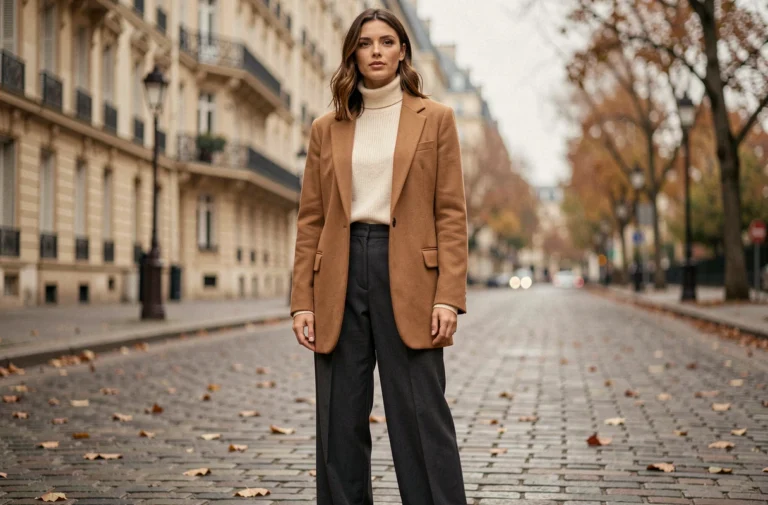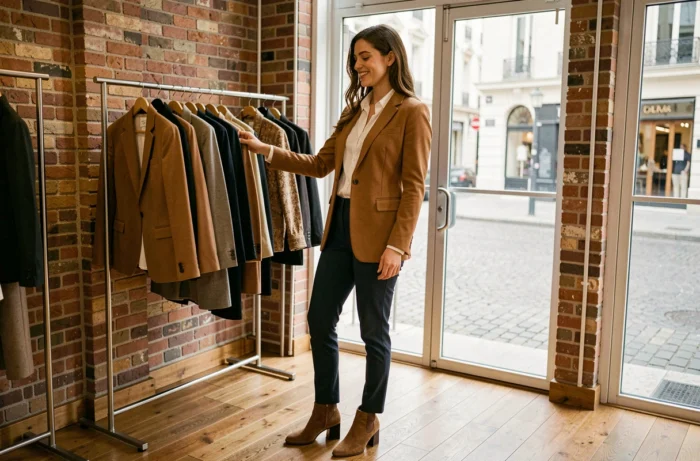
The spring-summer and autumn-winter 2026 fashion shows outline two opposing directions: on one side, streamlined silhouettes and soft palettes like “Cloud Dancer”; on the other, an unapologetic maximalism with very visible prints and oversized accessories. Between these two poles, the question for a real wardrobe is measurable: how many trendy pieces should one actually integrate each season to refresh a style without turning their budget or wardrobe into a fashion show catalog?
Cost per outfit and lifespan: 2026 trends versus basics
Comparing trendy pieces and basics on two concrete criteria (versatility and perceived durability) helps to set a framework before any impulsive purchase. The table below contrasts the most cited categories of clothing in the 2026 fashion analyses.
| Type of piece | Versatility (number of possible outfits) | Estimated relevance duration | Boredom risk |
|---|---|---|---|
| Barrel jeans (2026 trendy cut) | Medium (3-4 combinations) | 2-3 seasons | Moderate |
| Classic straight jeans | High (6+ combinations) | Several years | Low |
| Colorful oversized sweater | Medium (3-4 combinations) | 2-3 seasons | Moderate to high |
| Solid dense knit sweater | High (5+ combinations) | Several years | Low |
| Signature accessory (brooch, statement jewelry) | High (transforms any outfit) | Variable depending on the piece | Low if well chosen |
What stands out: a signature accessory offers the best renewal/investment ratio. It transforms a basic without altering its longevity. In contrast, a piece with a very marked cut like barrel jeans limits possible combinations.
To explore options that allow navigation between these categories, one can consult the wype.fr website in detail on the pieces available by style and price range.
Maximalism versus minimalism: adjusting the dial to daily life
The return of maximalism in 2026 does not mean that every outfit must scream. Recent analyses show a questioning of “quiet luxury” in favor of a more expressive style, with bold prints, layering, and neon colors. However, minimalism has not disappeared: it remains the foundation of most functional wardrobes.
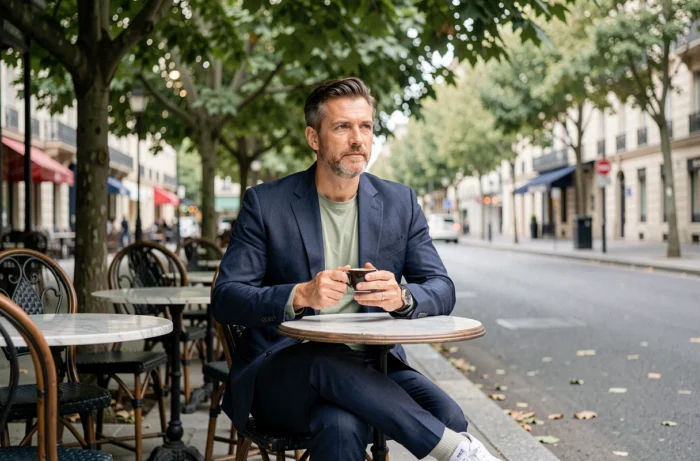
The difference between the two approaches hinges on one precise point: the number of “strong” pieces per outfit. An operational rule is to limit maximalist elements to one per look. A visible print on top calls for a neutral bottom. A statement brooch works better on a solid blazer than on a patterned shirt.
This logic of “one strong signal, the rest in the background” avoids the disguise trap. It allows for the integration of the bold palettes of 2026 (neon tones, marked chromatic contrasts) without sacrificing the readability of the silhouette.
Translating maximalism on a limited budget
Buying a maximalist piece every month can be expensive and cluttering. Three to four trendy pieces per season are enough to refresh a wardrobe if they are chosen to complement existing basics.
- A bright-colored piece (butter yellow sweater, colorful cropped jacket) that pairs with at least three bottoms already owned
- A signature accessory (brooch, structured jewelry, contrasting gloves) that changes the look of a neutral outfit
- A “moment” cut (barrel jeans, short trench) tested in the fitting room with several tops from the wardrobe before purchase
- A visible print reserved for a single piece, to avoid visual saturation in everyday looks
The pre-purchase test is simple: if the piece only works with one existing outfit, it does not belong in a real wardrobe.
2026 signature accessories: the cheapest lever to change style
Brooches, gloves, statement jewelry, and bags with strong personalities are increasingly prominent in the trends identified for 2026. Their value goes beyond mere decoration: a well-chosen accessory restructures the reading of an entire outfit.
A gold brooch on a coat collar transforms a basic overcoat into a standout piece. Colorful gloves add a chromatic signal without requiring a complete rethink of the silhouette. The unit cost of these accessories remains far lower than that of a garment, and their lifespan in a wardrobe does not depend on seasonal cycles.
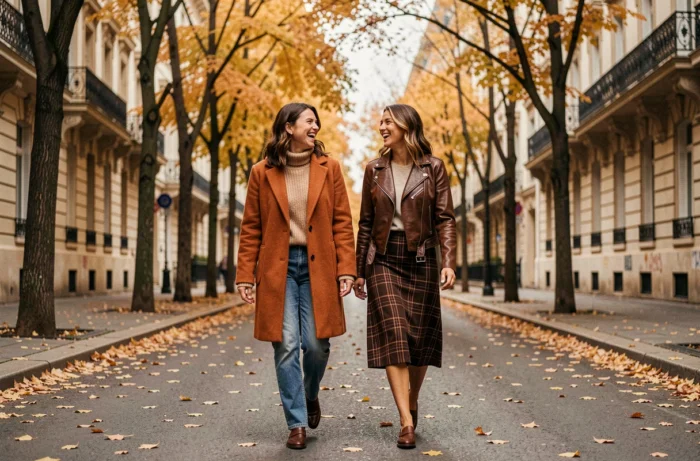
Choosing an accessory that won’t date in six months
Not all accessories age at the same rate. Simple geometric pieces, noble materials (metal, leather, ceramic), and classic formats (round brooch, signet ring, dangling earrings) withstand the seasons better than very specific shapes from a particular fashion show.
Favoring a timeless accessory in a trendy color combines both logics: anchoring in the season and long-term reusability. A rigid brass bracelet in a neon shade meets the maximalism of 2026 while remaining wearable in two years with a sober outfit.
Sustainable buying rhythm and wardrobe renewal
Adopting the 2026 trends without accumulating requires defining a buying rhythm. The most effective logic is based on replacement rather than addition: one piece comes in, one piece goes out.
Before each purchase, three concrete checks help filter the impulse:
- Does the piece replace a worn-out or unsuitable garment, or does it add to an already complete stock?
- Does it work with at least three existing outfits without any additional purchases?
- Is its maintenance (washing, ironing, specific cleaning) compatible with actual daily habits?
The most functional wardrobe is not the one that follows all trends, but the one that integrates the right ones at the right time. The chromatic contrasts and signature accessories of 2026 lend themselves particularly well to this selective approach, as they alter the perception of a wardrobe without increasing its volume.
The bold palette of this season, between neon tones and soft shades like “Cloud Dancer,” offers a wide playground for those who already have a base of neutral colors. Two or three well-targeted pieces change the overall look more than a complete overhaul.